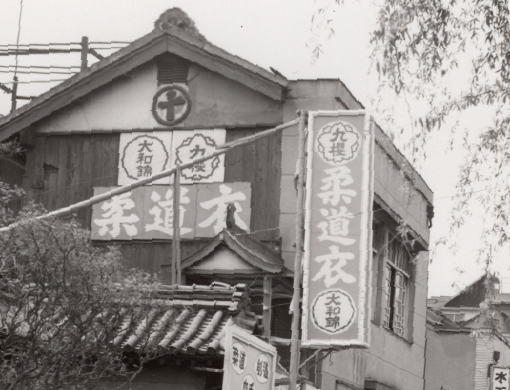
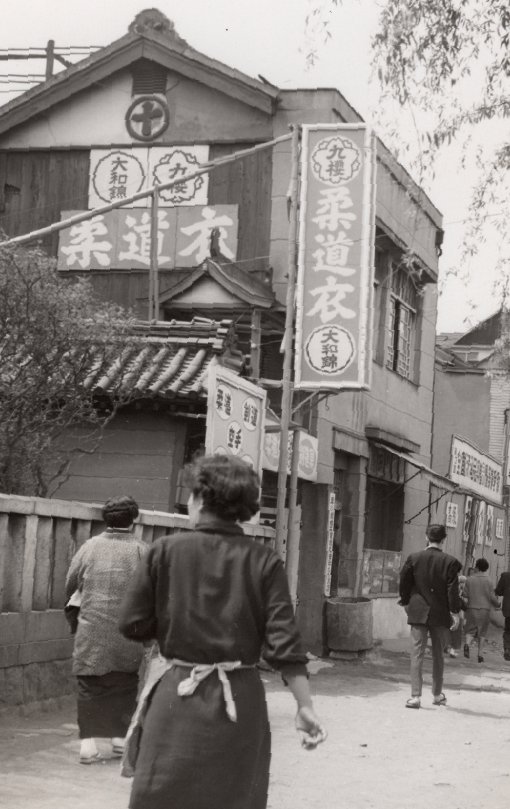
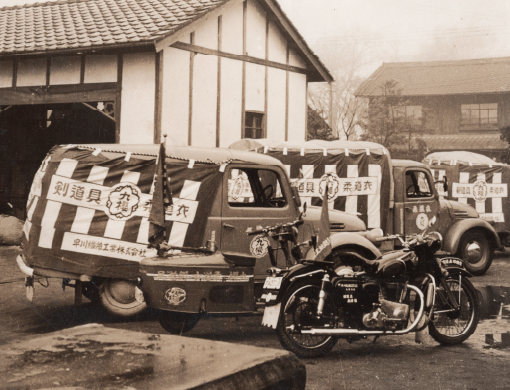
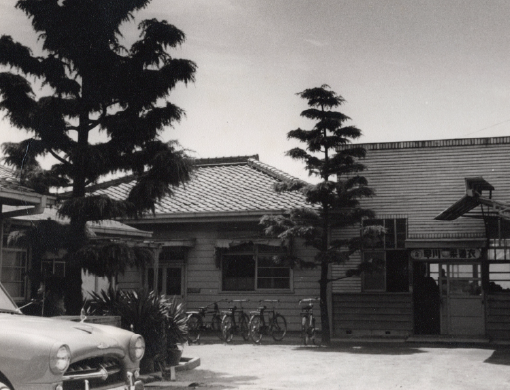
100 Years of History and Looking Ahead to the Next 100 Years
Founded in 1918 (Taisho 7). By working closely with the martial arts community and responding to its needs,
we have dedicated ourselves to craftsmanship and have become a globally recognized comprehensive martial arts equipment manufacturer.
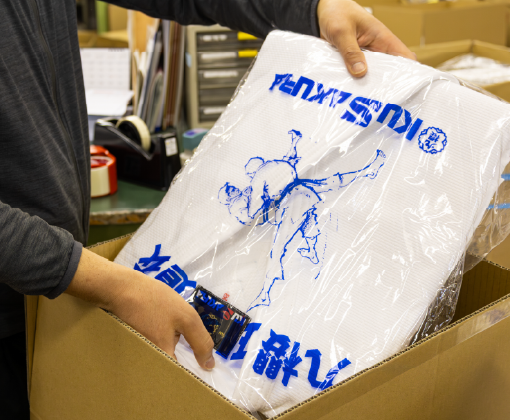
We are the only manufacturer in the world that handles the entire production process for judogi, from the fabric itself to the finished uniform.
Leveraging this strength, we not only consistently provide high-quality products, but have also pioneered global standards by utilizing the unique technologies we have cultivated at every stage of production.
As a manufacturer involved in martial arts, which originated in Japan, we strive to be the world’s best in terms of functionality and quality.
With this commitment in mind, we look forward to walking alongside all of those who love martial arts for the next 100 years to come as well.
Our Commitment to Integrated Production
Kusakura’s judogi are produced entirely in-house, from the weaving of the fabric to the finished product.
At every stage of the process, we have skilled artisans who are fully attuned to our customers’ needs.
They devote their time and effort to creating the best possible products for the wearer, applying their ingenuity and expertise to each and every garment.
This spirit and craftsmanship are infused into all of our martial arts equipment.
The Legacy of Looms and the Art of the Artisan
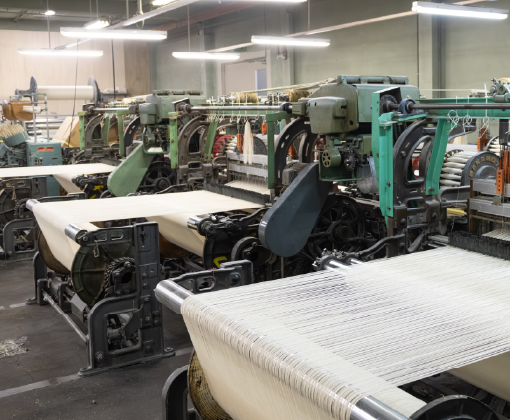
A Rare, Custom-made Loom Designed Specifically for Judo Uniforms
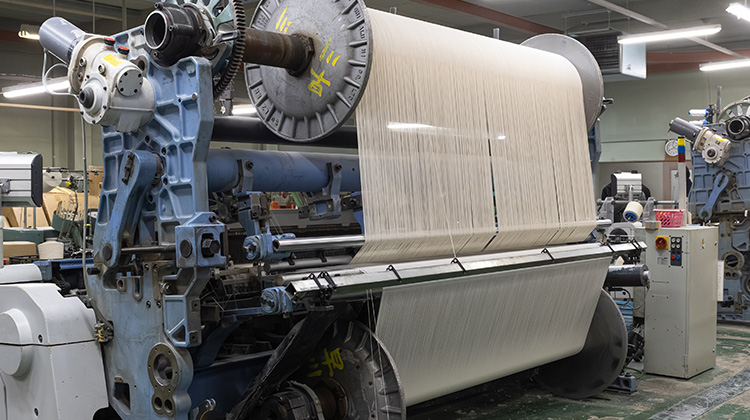
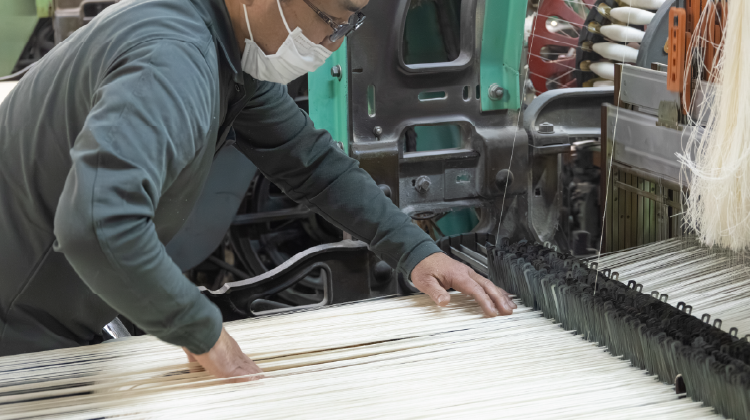
One of only two Sulzer looms in the world, this machine—which features a double beam (with yarn bobbins on both the upper and lower beams)—was custom-ordered from a Swiss manufacturer.
Unique Weaving Crafted by Skilled Artisans
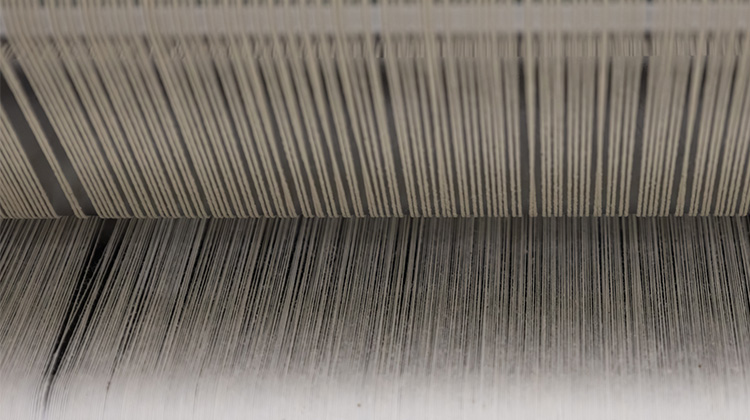
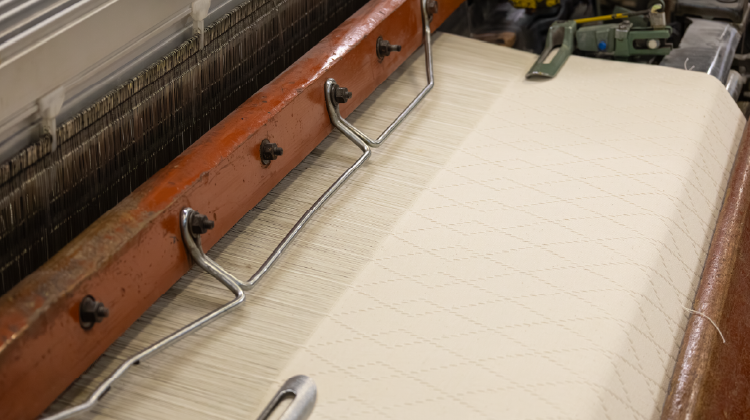
By combining thick and thin threads, we weave the distinctive pattern (double sashiko) used on the jacket of judo uniforms. We employ a special technique unique to Kusakura, and despite the difficulty in sourcing replacement parts when the loom breaks down, we take great care to keep it running.
Heritage: The Embodiment of Kusakura's Commitment to Quality
A shuttle loom that has been in operation for over 50 years and one of Kansai’s top artisans: using shuttle looms that are over 50 years old to weave the fabric for the hems of the judogi. Originally starting with only two machines, through learning how to maintain them there are currently seven in operation. Supporting this operation is a 60-year-old artisan who is considered one of the best in the Kansai region.
Prioritizing "Quality" and "Attention to Detail" over Production Efficiency
The primary reason for using a shuttle loom is that it produces “selvedges” where the fabric forms a pouch-like shape rather than having raw, unfinished edges. Very few manufacturers use this pouch-like fabric for hems,
and this remains a core commitment that Kusakura continues to uphold to this day. Although it takes a day and a half of operation following this technique to weave approximately 40 meters and production efficiency is low, we continue to use this method to maintain the utmost quality and uniqueness.
Rigorous Quality Control
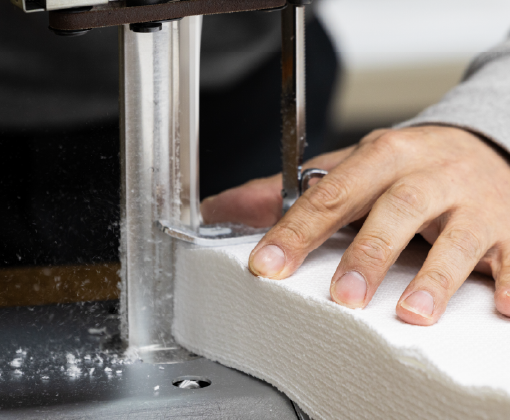
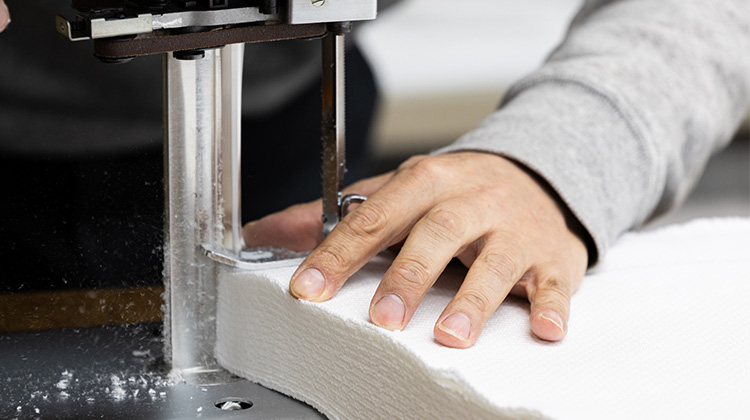
Cutting by Hand and Eye: We do not use automatic cutting machines—which are essential for mass production—but instead place great importance on the manual cutting process to avoid fabric stains and the inclusion of stray threads (threads of a different color). We cut the fabric while visually inspecting it in order to remove any unusable sections.
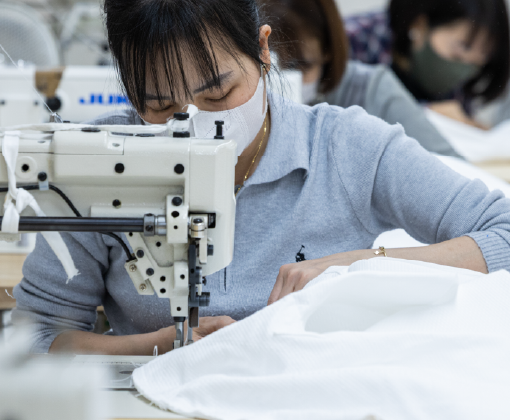
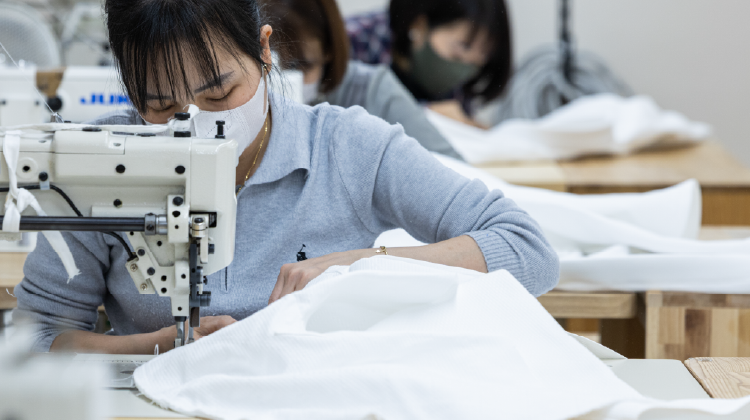
Sewing from Start to Finish Done Entirely by a Single Person
In our sewing department, rather than relying on assembly-line production for individual sections, we ensure the highest quality in every single garment by having a single person sew each piece from start to finish. Performing meticulous stitching that cannot be achieved through cutting alone, such as adjusting the stitch width in 1mm increments to create a soft collar, and ensuring the shoulder seams remain light and comfortable.